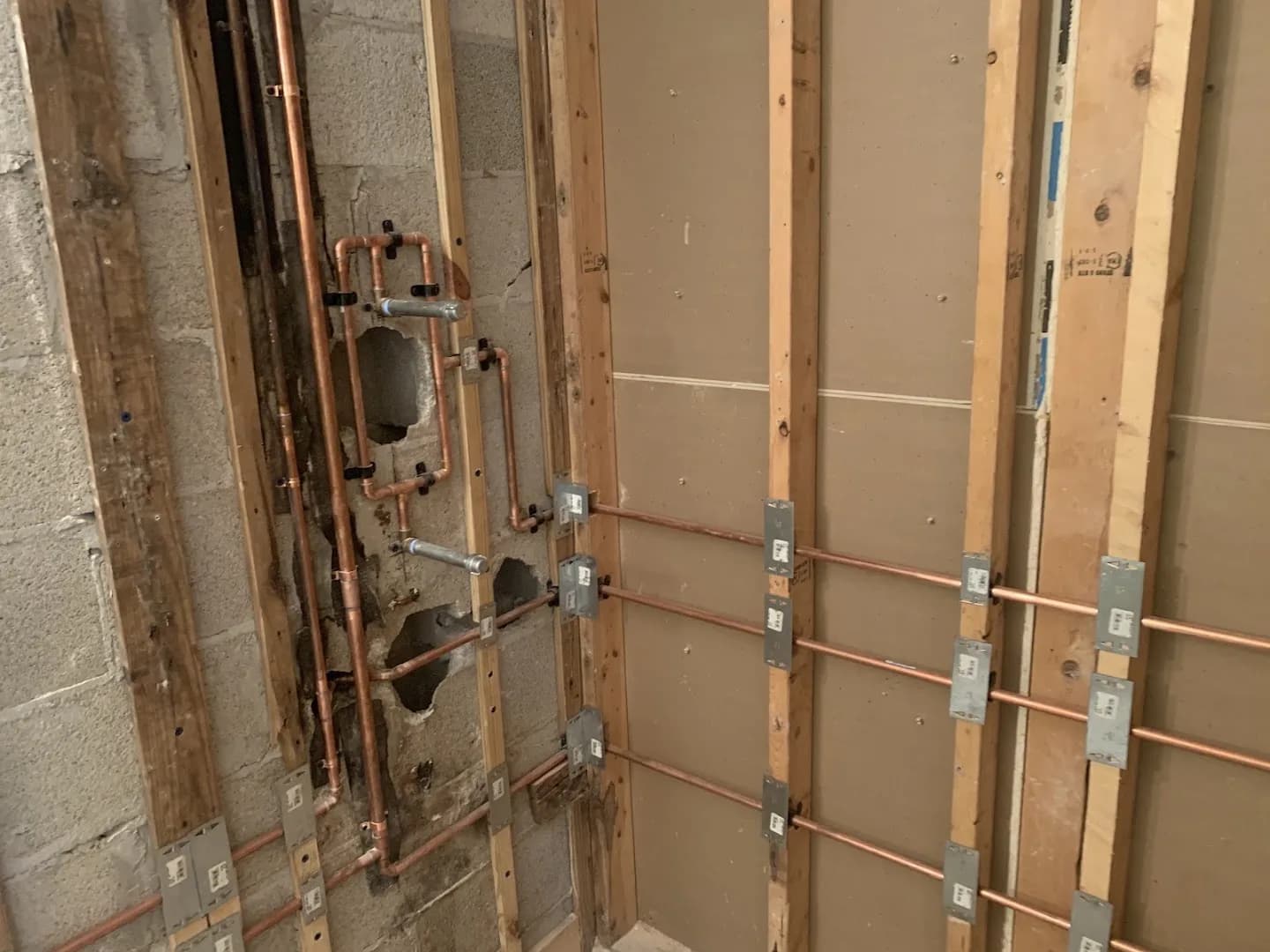
The most expensive water leaks are the ones you never see. A dripping faucet is obvious; a pinhole leak inside a wall or a line running under your foundation can waste hundreds of gallons and cause real damage before there's any visible sign. The good news is that hidden leaks leave clues, and there's a simple test you can run yourself to confirm one exists. This guide covers the warning signs of a hidden water leak, how to check your water meter, and when it's time to call for professional leak detection — written for homeowners across northern Palm Beach County and Martin County.
What are the signs of a hidden water leak?
Hidden leaks announce themselves indirectly. Watch for:
- A higher water bill with no change in how much water you're using — often the first and clearest sign.
- The sound of running water when every fixture and appliance is off.
- Damp, discolored, or stained walls or ceilings, or paint and wallpaper that bubbles.
- A musty odor or visible mold and mildew, which follow hidden moisture.
- Warped or buckling flooring, or a soft spot underfoot.
- Low water pressure throughout the home, as water escapes before it reaches your fixtures.
- Warm spots on the floor, which can indicate a hot-water line leaking beneath the slab.
Any one of these is worth investigating. Several together strongly suggest water is escaping somewhere it shouldn't.
How do I check for a leak with my water meter?
Before calling anyone, you can confirm a leak yourself with a simple water meter test:
- Turn off all water in and around the home — every faucet, the dishwasher, the washing machine, the ice maker, and irrigation.
- Find your water meter (usually near the street in a covered box) and look at the dial. Most meters have a small triangle, star, or "leak indicator" dial that spins when even a tiny amount of water is flowing.
- Watch the indicator. If it's spinning with everything off, water is moving through your system — which means a leak.
- Or read and wait: note the meter reading, leave the water off for an hour or two without using any, and check again. If the number changed, you have a leak.
This test confirms that you have a leak. It won't tell you where — and that's where professional detection comes in.
How do professionals detect a hidden leak?
Locating a leak without tearing open walls or floors takes specialized equipment. Professional leak detection uses non-invasive tools to pinpoint the exact source:
- Acoustic listening devices that amplify the sound of water escaping under pressure.
- Thermal imaging cameras that detect the temperature difference a leak creates behind a surface.
- Moisture meters that map dampness inside walls and floors.
- Pressure testing to confirm and isolate a leak in a specific line.
- Video inspection for leaks in drain and sewer lines.
Pinpointing the leak precisely is what makes the repair efficient — instead of guessing and opening up drywall in the wrong place, the plumber goes straight to the source. When the leak is beneath the foundation, it becomes a slab leak, which has its own signs and repair approach; our guide on the signs of a slab leak covers that in detail.
How much does professional leak detection cost in 2026?
Professional water leak detection typically costs $150 to $600, depending on the location of the leak, the methods needed, and how complex the job is. Leaks hidden under a slab or deep in a wall can push detection past $1,000 when they require extensive tracing.
One important thing to understand: detection and repair are two separate bills. Detection locates the leak — usually $175 to $500 in most cases — and the repair that follows is a separate scope, priced on its own once you know exactly what and where the problem is. That's actually to your benefit: paying to find the leak precisely keeps the repair from becoming an expensive guessing game.
Why does finding leaks early matter so much in Florida?
Two reasons. First, our warm, humid climate turns a small hidden leak into mold and structural damage faster than a drier climate would — moisture that would slowly cause trouble elsewhere causes it quickly here. Second, many South Florida homes are on slab foundations, so a hidden supply-line leak can be running under the house, where it undermines the foundation while staying completely invisible. Catching a leak while it's a detection-and-repair job, rather than a detection-plus-restoration-plus-mold job, is the difference of thousands of dollars.
If your water bill jumped, you hear running water with everything off, or you've got a damp spot you can't explain, don't wait for it to reveal itself.
Where are hidden leaks most likely to happen?
Knowing the usual suspects helps you check the right places. Hidden leaks tend to develop at pipe joints and fittings, where connections loosen or corrode over time; behind fixtures like toilets, tubs, and under-sink supply lines; at the water heater, where a slow tank or valve leak can go unnoticed in a garage or closet; and in supply lines running through walls or under the slab, which is where the most damaging and hardest-to-spot leaks occur. Older homes with aging copper or, in Florida, polybutylene pipe are especially prone to developing pinhole leaks throughout the system — if that's your situation, our guide on polybutylene pipes in Florida is worth a read.
Outdoor leaks matter too: irrigation lines, hose bibs, and the main supply line between the meter and the house can all leak silently into the ground. If your meter test shows water moving but nothing indoors is wet, an underground or outdoor line is a likely culprit — another reason precise professional detection is worth it before anyone starts digging or opening walls.
Find the leak before it finds your foundation
A hidden leak only gets more expensive the longer it runs. A quick meter test can confirm one today, and professional detection pinpoints it before it does real damage. People's Choice Plumbing provides non-invasive leak detection across Jupiter, Palm Beach Gardens, Tequesta, North Palm Beach, Hobe Sound, Stuart, Palm City, and Jensen Beach.
Schedule leak detection or contact our team today.
Talk to a licensed plumber
Get a firm quote for your home from People's Choice Plumbing, serving Jupiter, Palm Beach Gardens, and all of northern Palm Beach County and Martin County.
Frequently Asked Questions
What are the signs of a hidden water leak?
Common signs include a higher water bill with no change in usage, the sound of running water when fixtures are off, damp or discolored walls and ceilings, a musty odor or mold, warped flooring, low water pressure, and warm spots on the floor.
How can I tell if I have a water leak using my meter?
Turn off all water in the home, then check your water meter's leak-indicator dial. If it's spinning with everything off, or if the meter reading changes after an hour or two with no water used, you have a leak somewhere in the system.
How much does professional leak detection cost in 2026?
Professional leak detection typically costs $150 to $600, and leaks hidden under a slab or deep in a wall can exceed $1,000. Detection and repair are billed separately — detection locates the leak, and the repair is priced on its own.
How do plumbers find a leak without tearing up the house?
They use non-invasive tools — acoustic listening devices, thermal imaging cameras, moisture meters, pressure testing, and video inspection — to pinpoint the leak's exact location before any wall or floor is opened.
Why are hidden leaks especially damaging in Florida?
Florida's heat and humidity turn hidden moisture into mold and structural damage quickly, and many homes sit on slab foundations where a leak can run underneath the house, undermining the foundation while staying invisible.