A tankless water heater can last 20 years — or fail in eight. The difference is almost entirely maintenance, and here in Florida that comes down to one thing: keeping mineral scale off the heat exchanger. If you own a tankless unit in Palm Beach or Martin County and you've never flushed it, this guide is for you. It covers why the maintenance matters, how often to do it in our hard-water region, how to flush the unit yourself step by step, and when to call a professional instead.
Supplies checklist (for a DIY flush):
- A submersible/utility pump
- A 5-gallon bucket
- Two hoses (washing-machine hoses work well)
- 1 gallon of food-grade white vinegar (or a manufacturer-approved descaler)
- A tankless unit with isolation (service) valves already installed — see the note below if yours doesn't have them
Why do tankless water heaters need regular maintenance?
Because mineral scale is constantly building up inside them. Every time your tankless unit heats water, dissolved minerals in that water — mainly calcium and magnesium — leave a hard scale deposit on the heat exchanger, the component that transfers heat to the water. As that scale accumulates, it insulates the exchanger, forces the unit to work harder and less efficiently, restricts flow, and eventually can damage the exchanger outright. On top of the physical damage, most manufacturers require documented descaling to keep the warranty valid — skip it and a failure may not be covered. Flushing removes that scale before it does harm.
Why is this especially important for Florida homes?
Because Florida has some of the hardest water in the country. Our drinking water comes from a limestone aquifer, so it's loaded with the calcium and magnesium that form scale, and Palm Beach and Martin County water is decidedly on the hard side. A tankless unit that might go a couple of years between flushes in a soft-water state can build performance-robbing scale here in 12 to 24 months — sometimes less on a private well or unusually hard municipal supply.
That's the local reality national maintenance guides gloss over: the "flush it every year or two" advice written for the average U.S. home understates what a Florida unit needs. Here, scale is the single biggest threat to your tankless heater's lifespan, which is why staying on a maintenance schedule matters more than almost any other thing you can do for the unit.
How often should you flush a tankless water heater in Florida?
At least once a year is the minimum for Florida homes, and every six months is smart if you're on a private well or notably hard municipal water. The general national guidance of "once a year" is the floor here, not the target — our water hardness pushes many homeowners toward twice-yearly flushing. If you've installed a water softener, you can often extend the interval (more on that below).
If you genuinely can't remember the last time your unit was flushed and it's more than a couple of years old, treat it as overdue and schedule a flush now.
What's the difference between flushing, descaling, and cleaning?
These terms get used interchangeably, but there's a useful distinction:
- Flushing — circulating a solution (usually white vinegar or a commercial descaler) through the unit to dissolve and wash out mineral buildup. This is the core maintenance task.
- Descaling — specifically the chemical dissolving of scale; it's really a subset of flushing (the flush is how you descale). When someone says "descale," they mean the same job.
- Cleaning — the broader upkeep that also includes the exterior and, importantly, the inlet water filter/screen, which catches debris before it enters the unit.
In practice, a proper maintenance visit does all three: flush/descale the heat exchanger and clean the inlet filter.
How do you flush a tankless water heater yourself?
If your unit has isolation valves installed (most modern installations do), you can flush it yourself in about an hour. Safety first: shut off the gas and power before you begin, and confirm the power is off.
- Turn off the gas supply to the unit and cut the power at the breaker. Verify with a non-contact voltage tester if it's an electric unit.
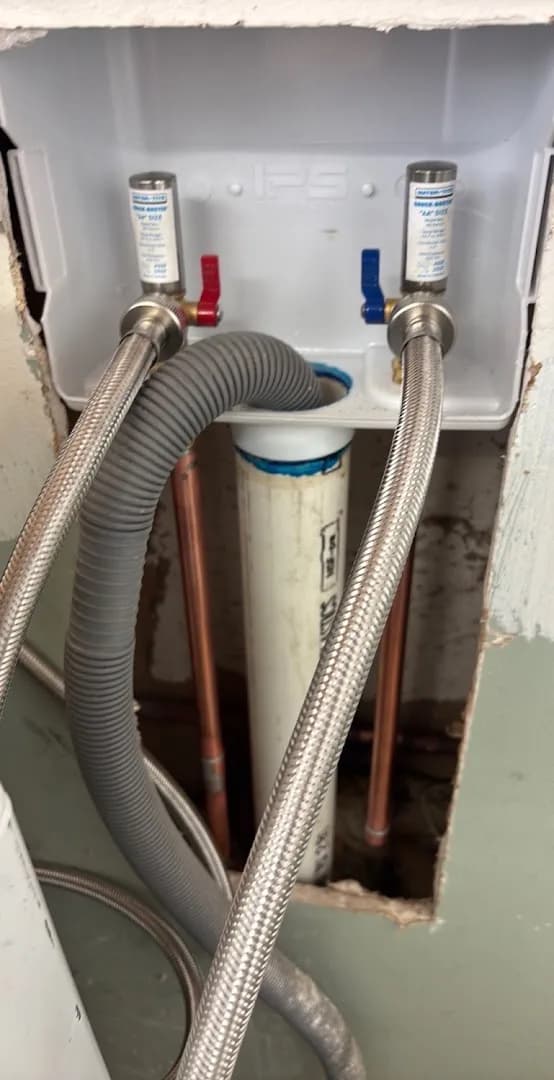
- Close the two isolation (service) valves — the hot and cold shutoffs on the unit — to isolate the heat exchanger from your home's water.
- Connect the hoses: attach one hose from the cold-side service port to your submersible pump sitting in the 5-gallon bucket, and the other hose from the hot-side service port back into the bucket, so the solution circulates in a loop.
- Add the vinegar: pour about 3–4 gallons of food-grade white vinegar (or an approved descaler) into the bucket so the pump is fully submerged.
- Open both service-port valves and turn on the pump. Let the vinegar circulate through the unit for 45–60 minutes. For heavily scaled units, swap in fresh vinegar after 30 minutes and repeat.
- Flush with clean water: disconnect the pump, and run 2–3 gallons of fresh water through to rinse out all residual vinegar and loosened scale — a 2–5 minute fresh-water rinse.
- Reassemble: close the service ports, remove the hoses, reopen the isolation valves, and restore gas and power. Run a hot tap to confirm normal operation.
What supplies do you need?
You need a submersible/utility pump, a 5-gallon bucket, two hoses (washing-machine hoses are ideal if they fit your service ports), and 1 gallon of food-grade white vinegar — 3–4 gallons if you want to change the solution mid-flush — or a manufacturer-approved descaling solution. Descaling kits that bundle the pump, hoses, and bucket are widely available if you'd rather buy it all at once. The one thing you can't work around is the isolation valves (see the last section).
How do you clean the inlet filter?
Most tankless units have a small inlet screen or filter on the cold-water inlet that catches sediment and debris. To clean it: with the water and power off and the cold isolation valve closed, remove the inlet filter (check your manual for its exact location), rinse the screen under running water to clear trapped grit, and reinstall it. Doing this at the same time as your annual flush keeps flow and pressure where they should be — a clogged inlet screen can mimic bigger problems.
What are the warning signs your tankless heater needs maintenance right now?
Don't wait for the calendar if you notice any of these — they're signs scale is already affecting the unit:
- Reduced hot-water flow or weaker pressure at the taps.
- Temperature fluctuations — water that swings hot and cold, or won't hold your set temperature.
- Longer heat-up times than the unit used to have.
- Error codes on the display (many units flag scale or flow problems directly).
- Rumbling, popping, or unusual noises from the unit.
Any of these means it's time to flush — or to call for service if the symptoms persist after a flush.
What happens if you skip maintenance?
Neglect is expensive. Without descaling, scale keeps insulating the heat exchanger until the unit runs inefficiently (higher energy bills), then unreliably (the fluctuations and error codes above), and finally fails. A tankless heater that should last 15–20 years can drop to 8–10 — or less — on Florida water without maintenance, and a heat-exchanger failure often means replacing the entire unit rather than a part. On top of that, skipped maintenance voids most manufacturers' warranties, so that replacement comes out of your pocket. A yearly flush is cheap insurance against all of it.
Should you install a water softener with your tankless heater?
Often, yes — it's worth serious consideration in our area. A water softener removes the calcium and magnesium that cause scale in the first place, which can greatly reduce or even eliminate the need for frequent flushing and protects every other appliance and fixture in the house too. The trade-off is that a softener has its own upfront cost and its own light maintenance (refilling salt). The decision framework: if you're investing in a tankless unit and your water is hard — which it is here — a softener often pays for itself across the water heater, dishwasher, and plumbing it protects. We're happy to test your water and lay out the numbers.
When should you call a plumber instead of doing it yourself?
Call a professional when:
- Your unit has no isolation valves — flushing requires them, and retrofitting them is a job for a plumber (a common situation on older or budget installs).
- The maintenance involves gas connections you're not comfortable with.
- You're getting error codes you can't clear after a flush.
- The symptoms — fluctuating temperature, weak flow, noises — persist after descaling, which can point to a failing component.
- You'd simply rather have it done and documented (which also helps with warranty compliance).
How People's Choice Plumbing handles tankless maintenance
We offer an annual tankless service visit that flushes and descales the unit, cleans the inlet filter, checks for error codes and worn components, and keeps your maintenance documented for warranty purposes. If your unit was installed without isolation valves, we can retrofit them so future flushes are simple. And if hard water is the underlying issue, we'll assess whether a water softener makes sense for your home. People's Choice Plumbing services tankless water heaters across Jupiter, Palm Beach Gardens, Tequesta, North Palm Beach, Juno Beach, Hobe Sound, Stuart, Palm City, and Jensen Beach.
Schedule tankless maintenance or contact our team. For the bigger picture on tankless units, see our complete tankless explainer and our annual plumbing maintenance guide.
Talk to a licensed plumber
Get a firm quote for your home from People's Choice Plumbing, serving Jupiter, Palm Beach Gardens, and all of northern Palm Beach County and Martin County.
Frequently Asked Questions
How often should you flush a tankless water heater in Florida?
At least once a year is the minimum for Florida's hard water, and every six months is wise if you're on a private well or unusually hard municipal water. A water softener can extend the interval. Nationally the guidance is once a year, but Florida water pushes many homeowners to twice yearly.
How do you flush a tankless water heater?
Shut off gas and power, close the isolation valves, connect a pump and two hoses to the service ports with a bucket of white vinegar, circulate the vinegar for 45–60 minutes, then rinse with 2–3 gallons of clean water, reopen the valves, and restore power. Clean the inlet filter at the same time.
What's the difference between flushing and descaling a tankless water heater?
They refer to the same job. Descaling is the chemical dissolving of mineral scale, and flushing is the process of circulating a vinegar or descaler solution through the unit to do it. Cleaning also includes the exterior and the inlet filter.
What supplies do I need to flush a tankless water heater?
A submersible pump, a 5-gallon bucket, two hoses (washing-machine hoses work), and about 1 gallon of food-grade white vinegar (or 3–4 gallons to change mid-flush) or an approved descaler. The unit must have isolation valves installed.
What happens if you don't flush a tankless water heater?
Scale insulates the heat exchanger, cutting efficiency and reliability and eventually causing failure. A unit that should last 15–20 years can drop to 8–10 in Florida, a heat-exchanger failure often means replacing the whole unit, and skipped maintenance voids most warranties.
Does a water softener reduce tankless maintenance?
Yes. A water softener removes the minerals that cause scale, which can greatly reduce or eliminate the need for frequent flushing and protects other appliances too. It has its own cost and light upkeep, but often pays for itself in a hard-water area like South Florida.