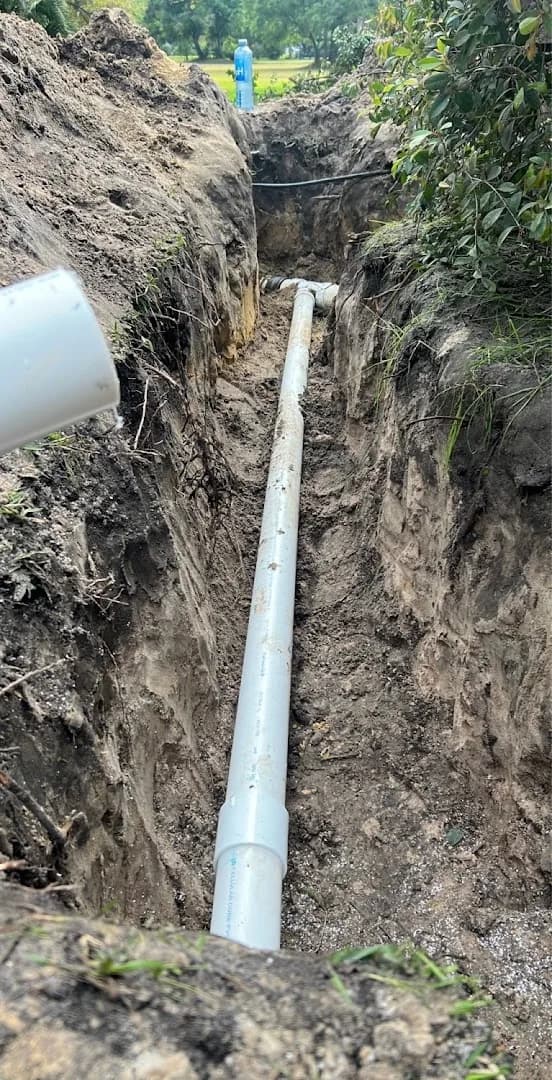
A shower drain that pools water around your feet — or worse, pushes dirty water back up — is more than an annoyance. Sometimes it's a simple hair clog you can clear in ten minutes; other times it's the first visible symptom of a serious problem deeper in your plumbing. Knowing the difference saves you both money and a much bigger mess. This guide walks through why a shower drain backs up, what you can safely try yourself, and the warning signs that mean it's time to call a plumber.
Why is my shower drain backing up?
Most of the time, a shower drain backs up because of a clog in the drain itself. The usual culprits are hair, soap scum, and residue from shampoos and body washes, which bind together over time into a mass that blocks the drain. If you're here in northern Palm Beach County, our hard water makes it worse: the calcium and magnesium in hard water react with soap to leave mineral deposits that build up inside the pipe, narrowing it until water can barely pass.
That's the good-news scenario — a localized clog you can often clear. The concern is when the backup isn't coming from the shower drain at all, but from further down the system.

Does standing water in my shower drain mean a bigger problem?
It can. Your shower drain is usually the lowest fixture in the house, and that matters. When a clog forms in the main sewer line, wastewater has nowhere to go and backs up to the lowest point first — which is often the shower. So standing water in the shower drain, especially if it appears when you flush a toilet or run the washing machine, can be an early sign of a main sewer line backup rather than a simple shower clog.
Main sewer line clogs account for roughly 20% of shower backup cases, and their causes are more serious: heavy debris buildup, tree roots that have grown into the line, collapsed pipe, or even an issue with the municipal sewer. That's why the pattern of the backup tells you as much as the backup itself.
How can I tell a simple clog from a sewer line problem?
Run through these signals:
It's probably a local shower clog if:
- Only the shower drains slowly; other fixtures work normally.
- Water drains eventually, just too slowly.
- You can see or feel hair and gunk near the drain opening.
It may be a main sewer line problem if:
- Multiple fixtures back up or drain slowly at the same time.
- Flushing a toilet causes water to rise in the shower, or the shower gurgles.
- You notice a sewage odor from more than one drain.
- Backups keep returning no matter how often you clear the shower.
The second list points to something beyond the shower, and that's a job for a professional with a camera and the right equipment — not a bottle of drain cleaner.
What can I safely do myself?
For a straightforward shower clog, a few DIY steps are worth trying:
- Remove and clean the drain cover, then pull out any visible hair with your fingers or a plastic drain-cleaning tool.
- Try a plunger — a cup plunger over the drain can dislodge a clog a few inches down.
- Flush with hot water, or a baking soda and vinegar mix followed by hot water, to help break down soap and grease buildup.
One caution: go easy on chemical drain cleaners. They can damage pipes with repeated use, they're often ineffective on hair and mineral clogs, and if the real problem is a sewer line issue, they do nothing but sit in standing water. If a simple clog doesn't clear with the steps above, stop there — pushing harder can turn a small problem into a bigger one.
When should I call a plumber?
Call a professional when the signs point past the shower drain: multiple slow fixtures, water rising when you flush, gurgling, sewage smell, or a backup that keeps returning. Clearing a main sewer line isn't a DIY job — it takes a sewer camera inspection to find the exact cause and professional equipment to clear it safely without damaging the pipe. A plumber can also tell you whether you're dealing with roots, buildup, or a structural problem, so it gets fixed properly the first time.
For persistent or recurring shower and drain clogs, our drain cleaning service clears the blockage and identifies whether something deeper is going on. If the same drain keeps coming back, hydro jetting vs. snaking explains which method actually lasts. If the shower is leaking rather than backing up, our leaking shower repair guide covers valve, pan, grout, and drain leaks.
How can I prevent shower drain backups?
A few simple habits keep most shower clogs from ever forming. Fit the drain with a hair catcher or mesh screen and empty it regularly — hair is the single biggest cause of shower clogs, and catching it at the surface keeps it out of the pipe entirely. Flush the drain with hot water periodically to keep soap and product residue from hardening into a blockage, and once a month a baking soda and vinegar treatment followed by hot water helps break down early buildup before it becomes a problem.
Because our hard water accelerates mineral and soap-scum buildup, homes in this area benefit from staying ahead of it rather than waiting for a backup. If you find yourself clearing the same drain over and over, that's a signal the buildup is deeper in the line than surface cleaning can reach — a good moment to have it professionally cleared and inspected before it becomes a full blockage.
Get it cleared the right way
A slow shower drain is easy to ignore until it becomes standing water — or a backup into your bathroom. Catching the difference between a hair clog and a sewer line problem early is what keeps a quick fix from becoming a costly one. People's Choice Plumbing handles drain cleaning and sewer camera inspection throughout Jupiter, Palm Beach Gardens, Tequesta, North Palm Beach, Hobe Sound, Stuart, Palm City, and Jensen Beach.
Request drain cleaning service or contact our team today.
Talk to a licensed plumber
Get a firm quote for your home from People's Choice Plumbing, serving Jupiter, Palm Beach Gardens, and all of northern Palm Beach County and Martin County.
Frequently Asked Questions
Why does my shower drain keep backing up?
Most shower backups are caused by clogs of hair, soap scum, and product residue, worsened in hard-water areas by mineral buildup inside the pipe. If the backup keeps returning or affects other fixtures, the problem may be deeper in the main sewer line.
Does standing water in my shower drain mean a sewer problem?
It can. The shower is usually the lowest fixture in the home, so a main sewer line clog often backs up there first. If standing water appears when you flush a toilet or run the washer, suspect a main line issue rather than a simple clog.
How do I know if it's a clog or a main sewer line issue?
A local clog affects only the shower and drains slowly. A main line problem shows up as multiple slow fixtures, water rising in the shower when you flush, gurgling, sewage odors from several drains, or backups that keep returning.
Can I fix a backed-up shower drain myself?
For a simple clog, you can remove the drain cover and clear hair, use a plunger, or flush with hot water and a baking soda–vinegar mix. Avoid heavy use of chemical drain cleaners, and call a plumber if the clog doesn't clear or other fixtures are affected.
When should I call a plumber for a shower backup?
Call a professional if multiple fixtures back up, water rises when you flush, you smell sewage from several drains, or the backup keeps returning. These point to a main sewer line issue that needs a camera inspection and professional clearing.